

Porcelain Moth Ceramic Tile Art Prompt
A decorative porcelain moth tile prompt with coherent cobalt wing patterns and practical ceramic design checks.
Porcelain Moth Ceramic Tile Art Prompt
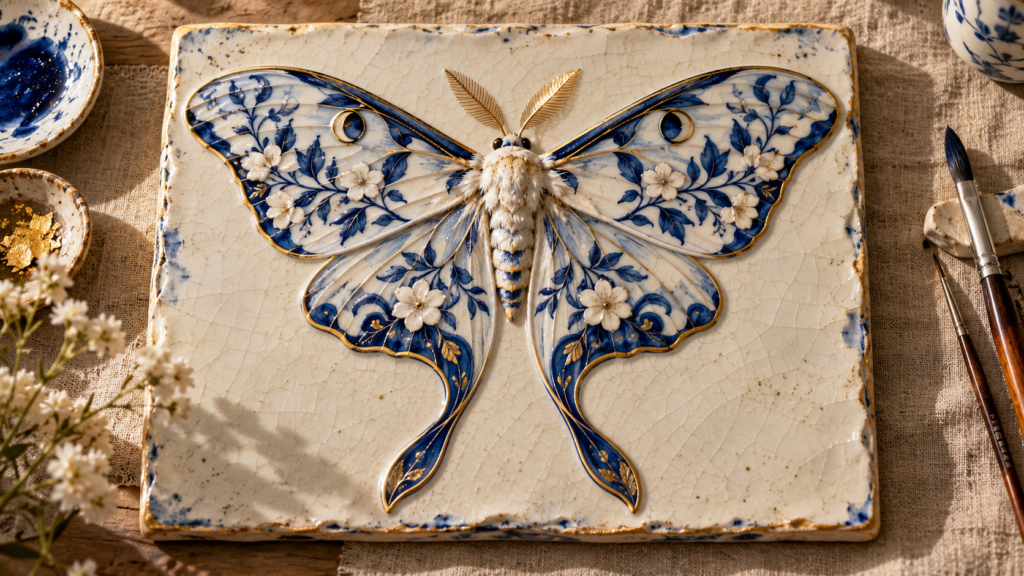
Use this porcelain moth ceramic tile prompt to explore a single decorative motif with enough structure to become a coherent collection. The cover is original concept art; it is not a photograph of a manufactured tile.
Copy the porcelain moth ceramic tile prompt
Create an original square ceramic tile design centered on one invented lunar moth. Give the moth symmetrical wings with a clear silhouette, cobalt-blue botanical filigree, tiny cream blossoms and restrained gold-luster accents. Place it on warm ivory glazed clay with a subtly irregular edge and fine crazing that is visible only on close inspection. Keep the body and antennae anatomically plausible for a stylized moth. Let the wing markings feel painted beneath the glaze rather than printed above the surface.
Compose the design so it reads from across a room and still rewards close viewing. Leave a calm margin around the wings, and keep the brightest gold near the central body instead of scattering it evenly. Light the tile from one side so the raised glaze and edge thickness are believable. Show one tile only, viewed nearly straight on. Do not add text, logos, a second insect, impossible reflections, random jewelry, or a watermark. Return a clean design view and a separate angled material view using the same motif.
Three controlled design variations
- Replace the cream blossoms with small silver-gray leaves while keeping the wing outline and cobalt pattern stable.
- Create a dusk edition with deeper navy glaze and softer gold, preserving the same central moth anatomy.
- Adapt the motif for a narrow border tile by cropping the wings intentionally rather than shrinking the entire moth.
How to evaluate the artwork
Compare the left and right wings for deliberate symmetry. Small handmade differences can add character, but the main veins, eye spots and leaf clusters should align as a designed pair. Check that the moth remains distinct from the background at thumbnail size. If the pattern becomes crowded, remove secondary flowers before changing the body proportions.
Inspect the material view separately. The cobalt should appear embedded in glaze; gold luster may catch the light, but it should not look like loose metallic foil. Verify the tile thickness, edge highlights and shadow on the table. A nearly frontal view is best for assessing the design; the angled view is for showing texture and physical depth. Do not present a generated render as evidence that a physical tile can be manufactured without testing the ceramic process.
Collection and production notes
For a matching set, document the wing silhouette, base glaze, cobalt hue and spacing rules. Let seasonal flowers or background tone change while the moth identity remains recognizable. Build a small contact sheet before choosing a final design, and reject versions with distorted antennae or accidental lettering. If a ceramic studio will produce the piece, provide a vector or carefully redrawn pattern and discuss glaze behavior with the maker. An AI image can guide a conversation, but it cannot specify firing shrinkage or exact pigment results.
When publishing the porcelain moth ceramic tile image, write descriptive alt text using the W3C image accessibility tutorial. Explore more AI Craft Pad prompts.