

Patchwork Fox Character Sheet Prompt
Create a consistent patchwork fox character sheet with three poses, material notes and controlled variations.
Patchwork Fox Character Sheet Prompt
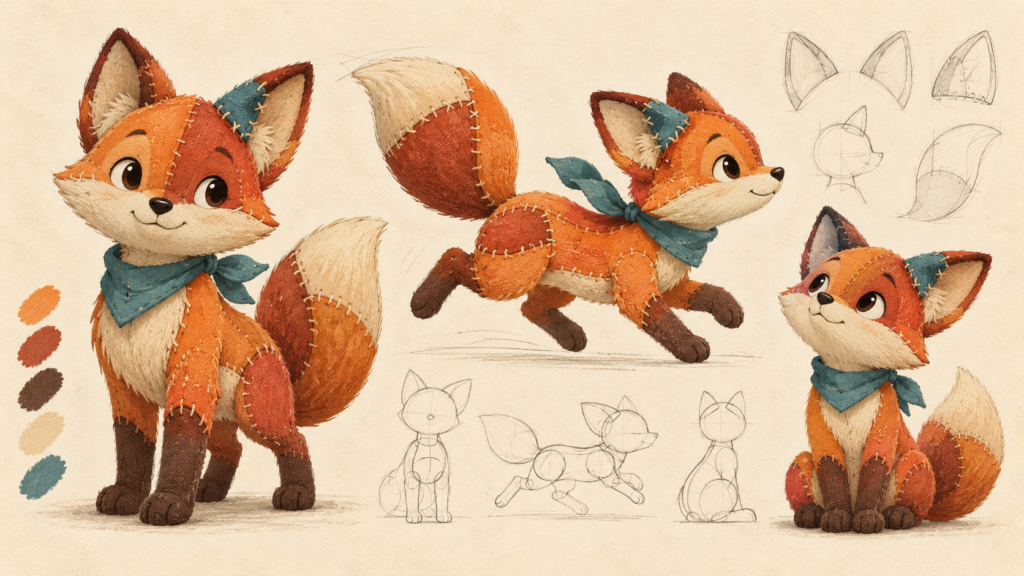
The patchwork fox character sheet prompt helps turn a single cute mascot idea into a usable reference. It specifies three poses, repeated construction details and a restrained palette so an illustrator or image model can keep one character recognizable.
Copy the patchwork fox character sheet prompt
Create an original character design sheet for a small patchwork fox made from soft orange and cream fabric. Show exactly three full-body poses on one clean sheet: front standing, three-quarter walking and seated side view. Keep the same head shape, large stitched ears, short muzzle, compact body and slightly oversized tail in every pose. Place a teal scarf around the neck in all three views. Add a small repaired seam on the left ear and a dark button on the vest; these details must appear in the correct position each time.
Use a warm handmade storybook look with visible woven cloth, subtle stitch lines, gentle shadows and clear outlines. Arrange poses with generous spacing on a neutral paper background. Add a small material swatch row for orange fur fabric, cream muzzle fabric, teal scarf and brown vest. Labels may be added later by a designer; do not generate unreadable lettering. Avoid realistic fur, extra limbs, mismatched eyes, costume changes, copied licensed characters, logos or watermarks. Deliver a wide presentation sheet and a square crop of the front pose using the same design.
Keep the fox recognizable across views
Build a short design bible before making more poses: specify the ear repair, scarf knot side, vest button, eye shape and tail tip. Compare the three silhouettes at thumbnail size. A character should still read as the same fox when color is temporarily hidden, so shape matters as much as orange fabric. If one view becomes too slender or tall, revise proportions rather than adding accessories to hide the mismatch.
Treat the sheet as a reference for later illustration, animation or plush prototyping. Mark which seams are structural and which are decorative. The seated view should preserve the tail volume and leg length from the standing view. If a future animator needs a turn, render a clean side view from this sheet before inventing new details. The character sheet is concept art, not a production-ready rig or sewing pattern.
Three controlled variations
- Replace the teal scarf with a moss green scarf while keeping its knot position and every other construction detail fixed.
- Make a rainy-day outfit with a tiny yellow coat, preserving the head, ear repair and tail silhouette.
- Create an expression strip for curious, delighted and sleepy moods without changing the eye spacing.
Quality review and next steps
Inspect small features at full resolution. Both eyes should align with the same muzzle plane; paw counts and ear seams should be stable. Look for fabric patches that merge into the vest or switch sides between poses. Remove accidental text and any extra mini characters that confuse the sheet. A simple background is useful because it makes corrections easier.
When an image model struggles with three views in one frame, generate the front pose first and use that approved image as a visual reference for the other two poses. Document the exact palette and landmarks in the next request. Assemble the final sheet manually if needed. This is often more reliable than asking for many poses, expressions and costume options in one generation.
Give the exported sheet descriptive alt text and a filename that identifies the character. If you publish a cropped pose separately, write new alt text for that crop. Include the prompts and usage rights for any tools you actually used, and keep a record of the approved version so later images do not drift.
For a classroom activity, invite learners to identify what changed in each variation and what stayed consistent. This turns the sheet into a visual consistency exercise, not just a decorative illustration. The three-pose structure also works for other original cloth animals by changing species-specific silhouette details.
Browse more original ideas in the AI Craft Pad prompt library. For image descriptions, see the W3C image accessibility tutorial.