

How to Use Light Sources in Moody AI Environments
Mood becomes believable when every glow has a source.
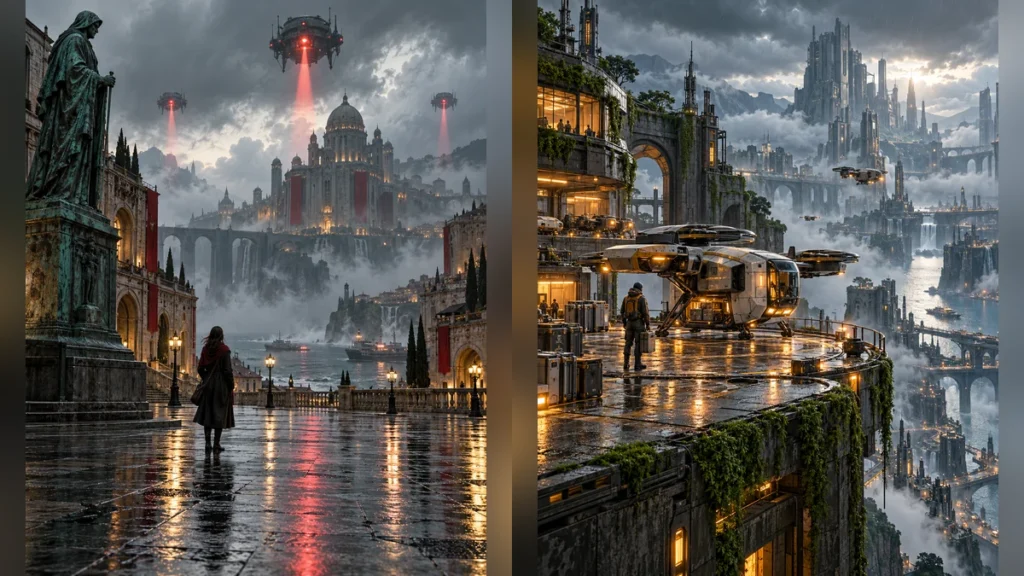
“Cinematic lighting” often produces attractive but contradictory highlights. A more useful prompt names the sources and describes what each can reach.
Map the light before styling
Identify the key source, fill, and one optional accent. In a rainy alley, the key may be a warm doorway, the fill a cool overcast sky, and the accent a red signal farther down the street. State their relative strength and positions. The near wall may catch doorway light; a distant roof should not.
Match light to material
Wet stone reflects broadly, polished metal creates sharper highlights, cloth absorbs more light, and fog softens distant contrast. Ask for these responses explicitly. Use darkness to frame the subject but preserve enough midtone detail to see construction. More glow is not automatically more dramatic.
Check the result physically
Trace the direction of cast shadows and eye catchlights. Are they compatible with the named sources? Do reflections correspond to lights visible or plausibly outside frame? If not, simplify the setup and regenerate. When producing a series, keep the lighting logic consistent, then vary one source—dawn replacing a lamp, for instance—to show time passing without losing the world.