

Boutique Hotel Welcome Campaign Prompt
Create a three-image welcome campaign for an original boutique coastal hotel. Copy the prompt, adapt three variations and check the results.
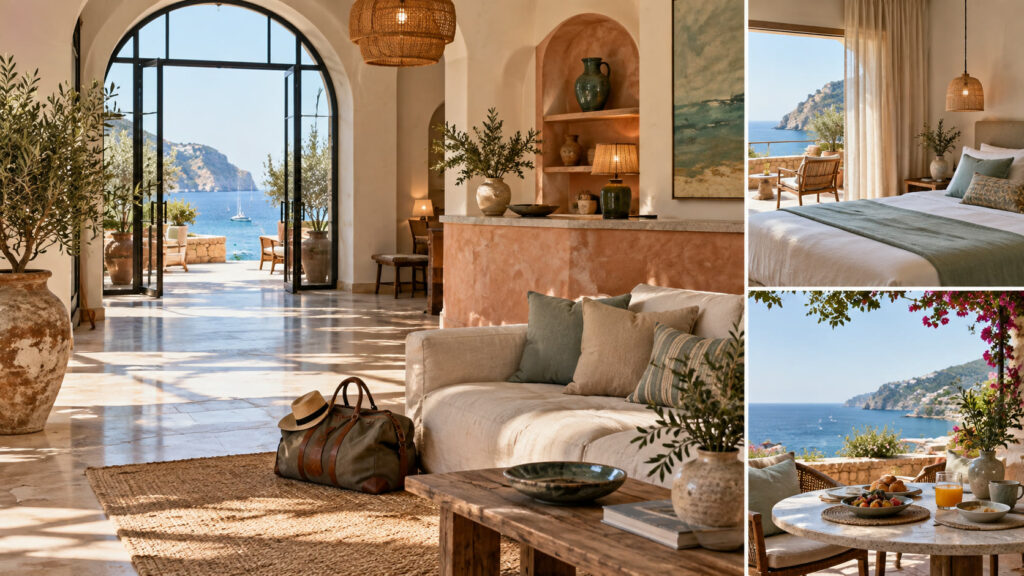
Boutique hotel welcome campaign prompt is a ready-to-adapt brief for a coherent set of commercial or editorial visuals. It starts with the actual deliverable, then controls what must stay consistent across formats. Replace any product or organization details with approved facts before running it. The image below illustrates a possible direction; use it as a reference, not as proof that every generated panel is publication-ready.
Copy the Boutique hotel welcome campaign prompt
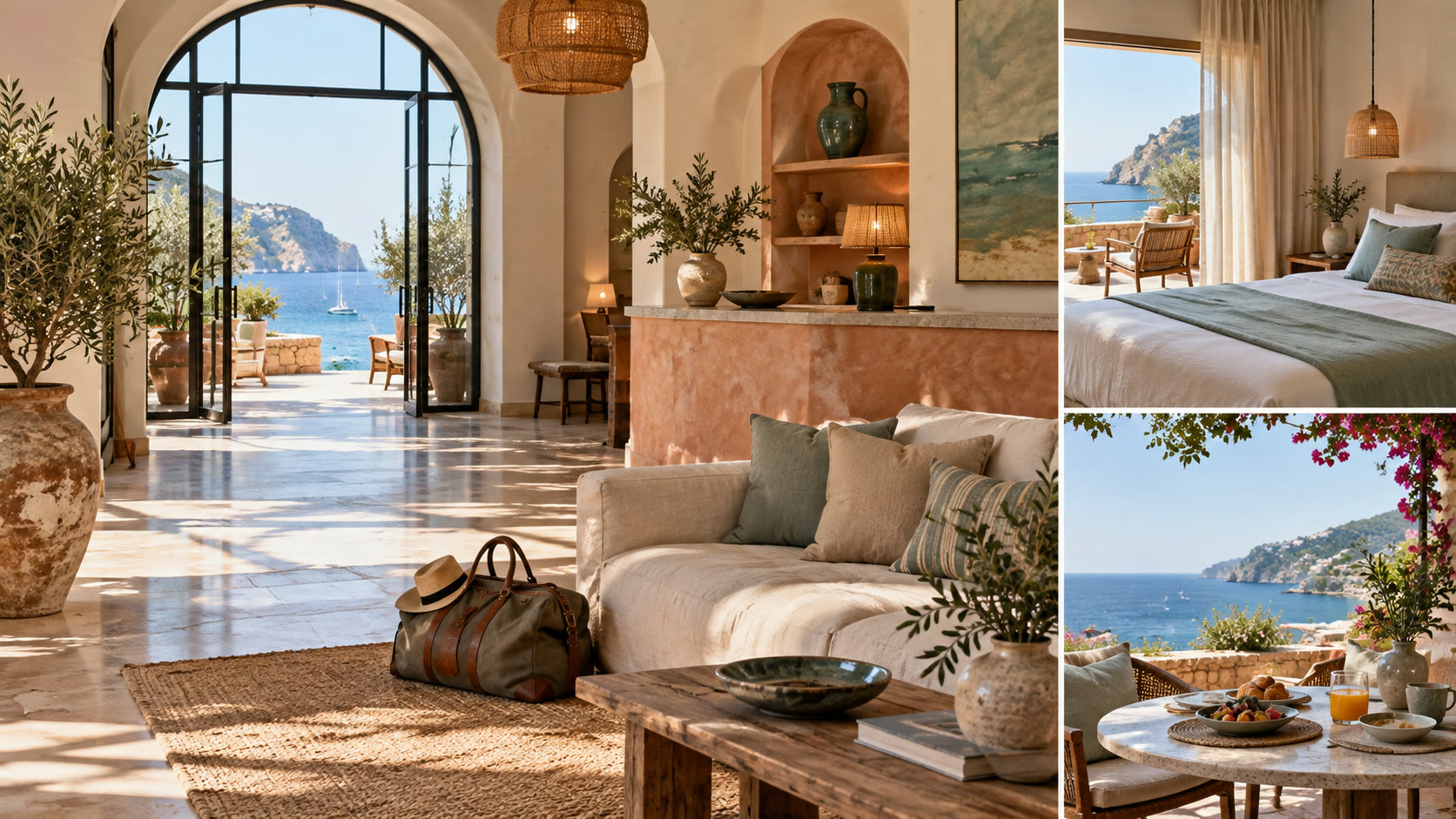
Create a three-image welcome campaign for an original boutique coastal hotel. Use one consistent building: an arched limestone lobby opening to the sea, a guest room with linen and sea-glass accents, and a breakfast terrace with local ceramics. Keep architecture, palette, season and light direction coherent. Deliver one wide website hero and two complementary crops for email and social use. Show the place as inviting and believable, with no fabricated guest reviews, star ratings, logos, legible signage or impossible architectural transitions. Preserve space for later verified copy and booking details.
Three controlled variations
- Variation 1: Shift the campaign to early autumn with warmer textiles and quieter terraces.
- Variation 2: Make a family travel version showing shared spaces without identifiable guest faces.
- Variation 3: Create a business retreat version with a calm work nook and reliable natural light.
Prepare the real brief before you generate
Start with one approved reference for the subject and a short description of the audience, channel and decision the visual should support. Write down the number of images, intended crop ratios, minimum useful resolution and the visual elements that must remain identical. For Boutique hotel welcome campaign prompt, consistency is a production requirement: a changing product, space or interface can mislead an audience and make a campaign impossible to assemble. Name the exact object or service you are depicting and decide which features are verified. If the final design needs a price, date, label, metric or claim, reserve a clear space for it rather than asking an image model to invent it. Keep a copy of the source brief beside every generated result.
Choose a primary aspect ratio for the first pass. Generate one sheet or series so you can compare the parts together. If the model merges panels, changes an object between frames or fills a blank copy area with unreadable marks, revise that constraint and rerun the image. Use a fixed seed or reference feature only when the tool offers it; the brief should still explain what makes the set coherent. Review the full-size result before selecting a thumbnail. Small previews can hide distorted details, accidental text and inconsistent lighting. Use the three variations above as separate controlled tests, changing one visual decision at a time.
Production quality checklist
- Identity: Verify that the main subject and required visual system match across every panel.
- Composition: Check safe space for real copy, useful crops and clear focus at mobile size.
- Accuracy: Compare architectural elements across scenes and inspect whether every depicted amenity actually exists before using the images as property advertising.
- Rights: Avoid existing brand marks, unlicensed likenesses and unapproved client material.
- Handoff: Record chosen version, source prompt, crop sizes and any corrections still needed.
How to use the Boutique hotel welcome campaign prompt
Treat this result as a visual direction. Rebuild typography, logos, layouts and final product details in an editable design file. For photographed or represented products, compare the concept against the real item and approved references; regenerate or retouch any inaccurate feature. For interface concepts, replace invented screen content with the actual product and test accessibility and clarity. If people appear, verify consent and context before publication. Export the final deliverable at the dimensions required by the website, store or social platform, and inspect the exported file rather than trusting the generator preview. A strong image is only part of a trustworthy campaign.
Use this prompt in a short review cycle: brief, generate, compare, revise, then approve. Ask a teammate who did not write the prompt to identify what the visual seems to promise. Their reading can reveal unintended claims or mismatched details. A hospitality team can test art direction for a campaign, then replace concept scenes with approved property photography. Keep the best and rejected examples together so later variants follow the same decisions instead of restarting from scratch. If the result is visually attractive but structurally wrong, fix the structure first; color grading and decorative detail come later.
When placing the final Boutique hotel welcome campaign prompt visual on a website, write an accurate alternative description for its actual purpose. The W3C Images Tutorial explains how to choose useful text alternatives. Check the exported image at its real display size, then add approved copy and metadata in the publishing system.
Related prompts and next steps
Explore more free AI prompts and compare a related creative brief. Adapt the core prompt with your approved inputs, make one test series and apply the checklist before handing anything to a designer or publishing it.