

Stained-Glass Dragon Conservatory Prompt
Create stained-glass dragon with a copy-ready prompt, three variations and a visual quality checklist.
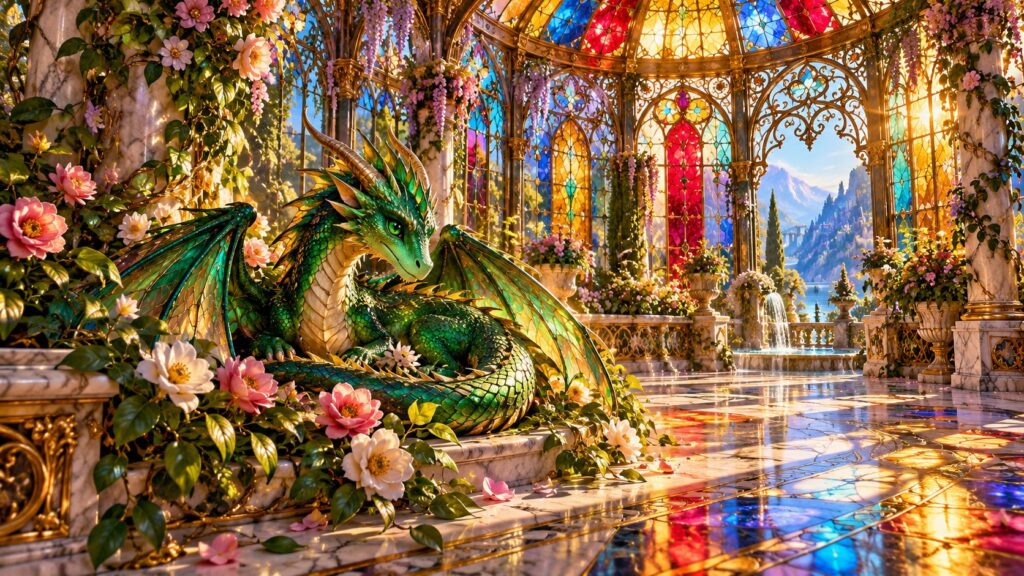
Stained-glass dragon turns a single imaginative idea into a specific, repeatable visual brief. Use this free prompt in an image model, then adjust the camera, lighting or detail level one variable at a time. The cover above is an example of the intended direction, not a guarantee of identical output.
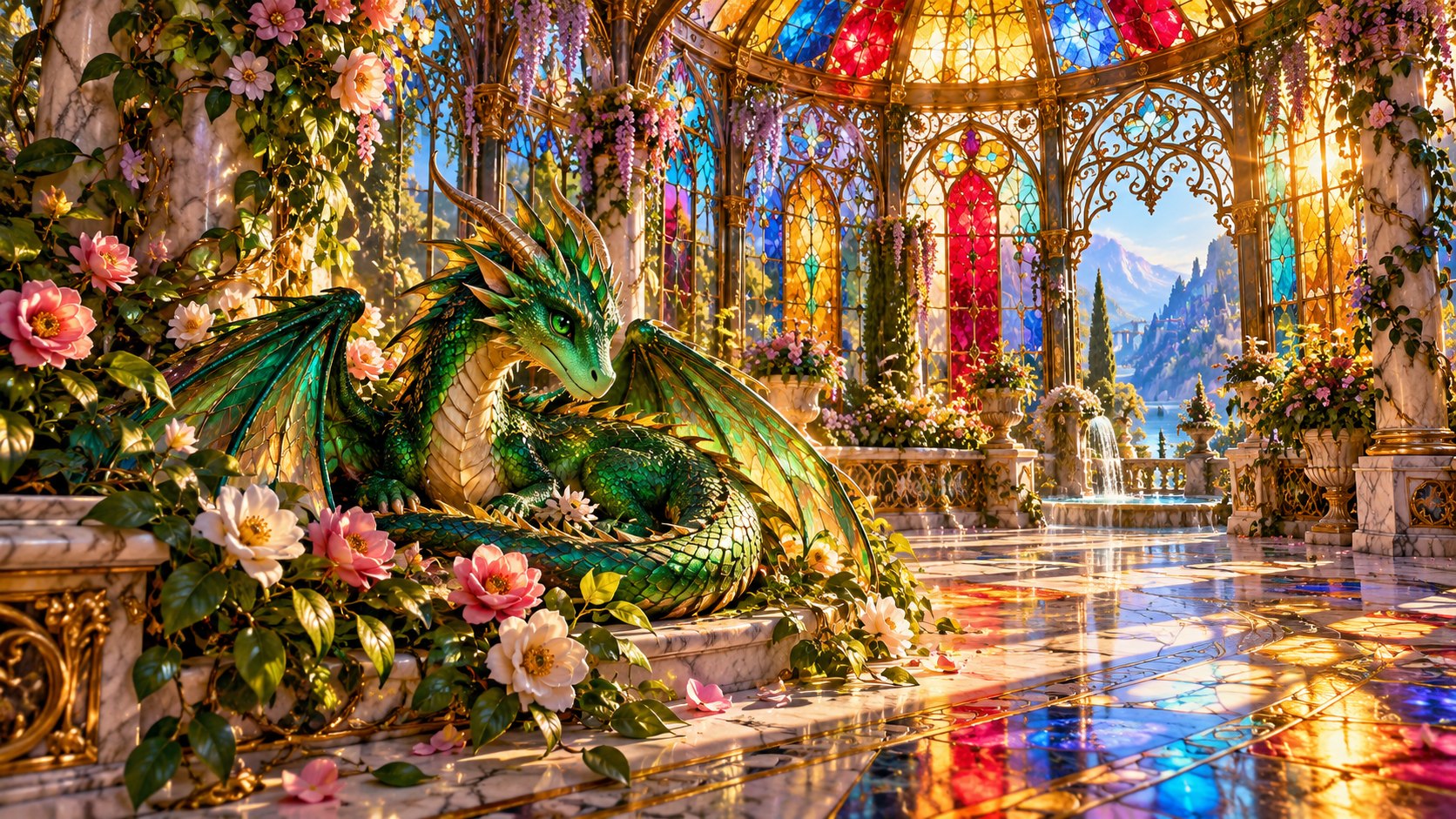
Copy-ready stained-glass dragon prompt
Create an original, cinematic landscape illustration of a small emerald dragon sleeping among flowering vines in an ornate stained-glass conservatory with marble floor and ironwork. Use a low indoor camera angle with the dragon clear in the central third and patterned light around it. Lighting: sunbeams through ruby, amber and sapphire glass forming colored patches across the floor. Include translucent glass pieces, leaf veins, subtle scales and cast-shadow direction. Give the main subject a clean readable silhouette at thumbnail size, maintain consistent perspective and believable material behavior, and keep the atmosphere inviting. Make the scene rich and colorful without turning every detail into the focal point. Avoid a giant aggressive dragon, illegible stained-glass lettering, rainbow fog or glass patterns painted onto the dragon. No words, logos, watermark, border or user interface. Deliver a polished 16:9 image with room for a safe crop near the edges.
What to change first
Start by deciding whether you want a wide establishing scene or a closer character moment. Preserve the main subject and its physical relationship to the setting while changing one camera choice. Then choose one dominant warm color and one dominant cool color. This gives a clear comparison between outputs instead of ten unrelated images.
Colored light should behave like light, not a decorative overlay. It must originate at the windows, align with the sun and fall on surfaces consistently.
Three original variations
- Set the conservatory at sunrise with softer amber patches.
- Use winter plants and frosted glass while keeping the dragon emerald.
- Compose a portrait crop focused on the dragon and two colored floor shadows.
Where this scene works best
This stained-glass dragon is designed for a wide story illustration, mood board or digital postcard. If you need a portrait print, regenerate with a portrait frame instead of cropping away the subject. For a website card, keep the strongest shapes in the middle and leave spare space around the edges. The generated image can also serve as a starting point for a character sheet or a short visual story, but each new format needs its own camera and continuity instructions.
Keep the original prompt beside every variation. Note which camera position, palette and material instruction changed, then choose the result that communicates the idea most clearly. A vivid color palette is useful only when the main subject remains easy to find.
Check the result before using it
- The focal subject is recognizable when the image is displayed as a small card.
- Light, shadows and reflections agree with the stated sources.
- Perspective, anatomy and repeated objects remain coherent.
- There are no accidental words, logos or artifacts in decorative details.
- The crop leaves the important subject intact on desktop and phone.
For a practical editing sequence, see our related guide below.
Continue with the step-by-step guide or read the visual design article. Explore more free ideas in the AI prompt library.
Frequently asked questions
Can I replace the style?
Yes. Replace the style language while keeping subject, composition and lighting constraints. Compare the new result against the same quality checklist.
Should I put words into the image prompt?
Add exact typography later in a layout editor. Image generation may distort letters, especially at small size.
Final review for stained-glass dragon
Review stained-glass dragon at full size and as a small card. Trace each colored beam to its window and keep the dragon silhouette readable against the foliage. Compare the first result with a second version that changes only one camera or lighting choice.
Keep the strongest stained-glass dragon version, then check perspective, material detail and the crop on a phone. For real-world visual reference, browse the Wikimedia Commons image library and verify the license of any image you reuse.