

Robot Motor Sizing and Drivetrain Tradeoff Analysis Prompt
Use this prompt to evaluate robot motor sizing, drivetrain choices and performance tradeoffs before you commit to a design.
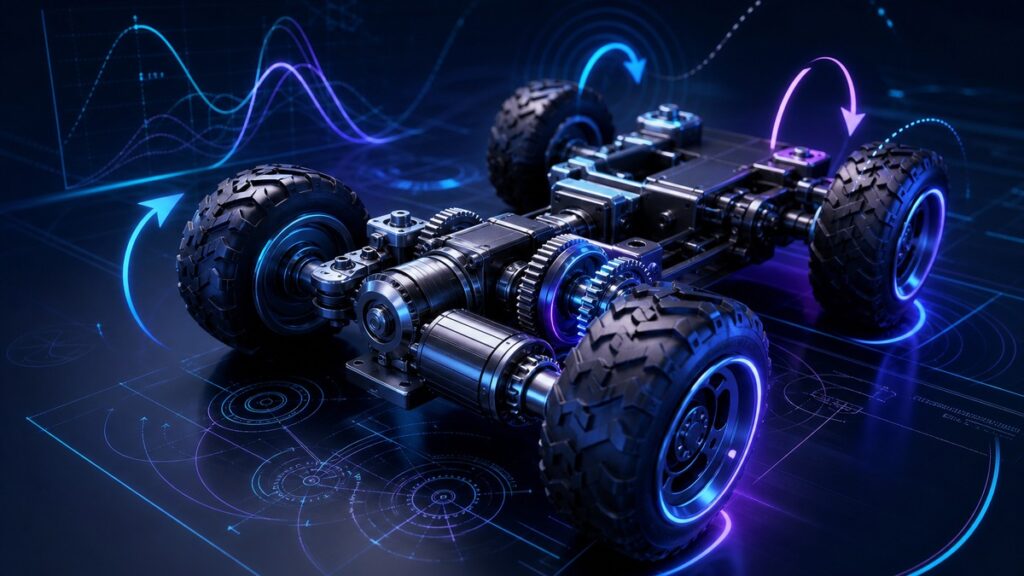
This robot motor sizing prompt helps you compare drivetrain options, estimate torque and speed needs, and make a practical design choice before you build.
Use it when you want AI to think through robot motor sizing, load assumptions, wheel choice, gear ratios, battery limits and the tradeoffs between performance, efficiency and control.
Analyze Robot Motor and Drivetrain Tradeoffs
Compare motor options, gearing and drivetrain design with clear assumptions so you can choose a balanced build instead of guessing.
COPY THIS PROMPT:
Act as a robotics engineer, mechanical designer and drivetrain analyst.
Help me evaluate robot motor sizing and drivetrain tradeoffs for a practical mobile robot design.
I want a clear, engineering-focused analysis that compares torque, top speed, acceleration, efficiency, current draw, battery impact, traction, gearing and controllability.
First, ask for any missing inputs you need. If information is missing, list the assumptions you will use and show how they affect the result.
Analyze these inputs:
– Robot mass
– Payload mass
– Wheel diameter
– Desired top speed
– Desired acceleration or push force
– Floor surface and slope
– Number of driven wheels
– Drivetrain type
– Battery voltage
– Motor type or candidate motor options
– Gear ratio options
– Duty cycle or expected runtime
– Space, weight and budget limits
Your analysis should include:
– Recommended motor torque range
– Approximate wheel torque requirement
– Suitable gear ratio or gearbox range
– Speed vs torque tradeoff explanation
– Current draw and power considerations
– Efficiency and overheating concerns
– Traction and slip limitations
– Whether the drivetrain is underpowered, overbuilt or balanced
– A short comparison of at least 2 drivetrain approaches when relevant
Output format:
1. Clarifying questions or assumptions
2. Key design inputs
3. Calculation summary in plain English
4. Tradeoff analysis
5. Recommended drivetrain direction
6. Risks and design warnings
7. Final recommendation
Important rules:
– Show reasoning step by step.
– State formulas or estimation methods in simple language.
– Keep calculations readable and practical.
– Do not hide uncertainty; explain where estimates are rough.
– Do not invent exact component specs if they are not provided.
– Favor useful engineering judgment over generic advice.
– If there are multiple valid choices, explain the pros and cons of each.
Optional add-on:
Finish with a short build checklist I can use before buying parts.
My robot project details:
[Enter mass, wheel size, speed target, terrain, battery voltage and candidate motors]
How to use this robot motor sizing prompt
What this prompt helps you do
Good robot design is rarely about choosing the biggest motor. It is about matching torque, speed and drivetrain layout to the real job the robot needs to do.
- Compare motor and gearbox options before buying parts
- Estimate whether the drivetrain can meet speed and torque targets
- Spot likely current draw and battery strain issues early
- Balance acceleration, traction and controllability
- Understand why one gear ratio may be better than another
- Reduce the risk of underpowered or overheating builds
- Make design choices with clear assumptions instead of guesswork
- Save time when planning prototypes and revisions
💡 Pro Tip
Give AI a realistic floor surface and slope, not just the robot’s weight. Traction and rolling resistance often change the result enough that a motor that looks sufficient on paper may still struggle in the real environment.
Example: From rough idea to usable drivetrain decision
Small indoor robot, 12 kg total mass, 100 mm wheels, 24 V battery, needs moderate speed and enough torque to climb a slight ramp.
Assumptions: The robot drives on smooth flooring with occasional ramp use and two driven wheels.
Calculation summary: The target speed suggests a moderate wheel rpm range, but the ramp requirement raises the torque demand more than the flat-floor speed target does. A very high gear ratio would improve pushing force but reduce top speed and make the robot feel less responsive.
Tradeoff analysis: A mid-range gearbox is the best starting point because it keeps current draw manageable while leaving room for controlled acceleration. A lower-ratio setup may feel fast but could stall more easily on the ramp. A higher-ratio setup may climb better but increase current and limit travel speed.
Recommendation: Choose a balanced drivetrain and verify it against wheel slip, thermal limits and expected runtime before finalizing the motor selection.
Why this robot motor sizing prompt works
Many AI requests ask for a motor recommendation without enough context, so the answer can become generic or overconfident. This prompt pushes the model to ask for missing inputs, show assumptions and analyze the drivetrain as a system.
That matters because wheel size, load, battery voltage, gearing and traction all affect the final result. A motor that seems strong on its own may still be a poor fit if the gearbox is too aggressive or the robot needs more continuous torque than the drivetrain can safely provide.
The prompt also keeps the output practical. Instead of a vague recommendation, you get a plain-English comparison of options, likely risks and a build-ready direction you can test against your own constraints.
Frequently Asked Questions
Can I use this prompt for different robot types?
Yes. It works for small mobile robots, line-followers, service robots, indoor platforms and other wheeled designs as long as you provide the right inputs.
Does the prompt replace real motor calculations?
No. It helps organize the analysis and estimate tradeoffs, but you should still verify the final choice with datasheets, test data and your own calculations.
What if I do not know the exact load or slope?
Ask AI to work with a range of values and label the result as approximate. That is often more useful than forcing a single guess.
Can I compare two motors or gearbox ratios with this prompt?
Yes. In fact, comparison is one of the best uses for it because the prompt asks for tradeoffs rather than a single blind recommendation.
Should I trust the first answer I get?
Not without review. Check the assumptions, confirm that the torque and speed targets match your project, and adjust the design if the result feels unrealistic.
When to use this prompt
Use this prompt during early robot planning, before you order motors, gearboxes or wheels. It is especially helpful when you are deciding between a faster drivetrain and one that can handle heavier loads or steeper surfaces.
It is also useful when a prototype is underperforming and you want to understand whether the issue is motor sizing, gear ratio choice, traction limits or battery constraints.
If you already have multiple candidate parts, the prompt can help you compare them in one place and decide which option is the better compromise.
Best practices for better drivetrain analysis
Be specific about the actual job the robot needs to do. Driving across a smooth lab floor is very different from climbing a ramp or carrying a payload over carpet.
Include battery voltage, wheel diameter and number of driven wheels, since those details strongly affect speed and torque results. If possible, give AI the exact motor model or at least the motor family so the comparison is more grounded.
Treat the answer as a design aid, not a final verdict. If the recommendation looks close, test it against your thermal budget, mechanical space and runtime needs before committing.
Finally, use the analysis to narrow your options, then run a simple prototype test or bench check to confirm the drivetrain behaves the way you expect.
Summary
This robot motor sizing prompt helps you turn basic build inputs into a practical drivetrain decision with clear assumptions, useful tradeoff analysis and a realistic recommendation.
Use robot motor sizing to compare torque, speed, traction and current draw before you buy parts, and refine the result with your own measurements or test data.
Looking for more practical AI prompts?
Explore AI Craft Pad for more useful prompts, tools and guides.
Browse Prompts →