Tether Brings Apple Continuity To Linux Desktops
Open-source project Tether aims to bring Apple Continuity-style features to Linux workstations, including iMessages, clipboard sync, and iPhone notifications over local connections.
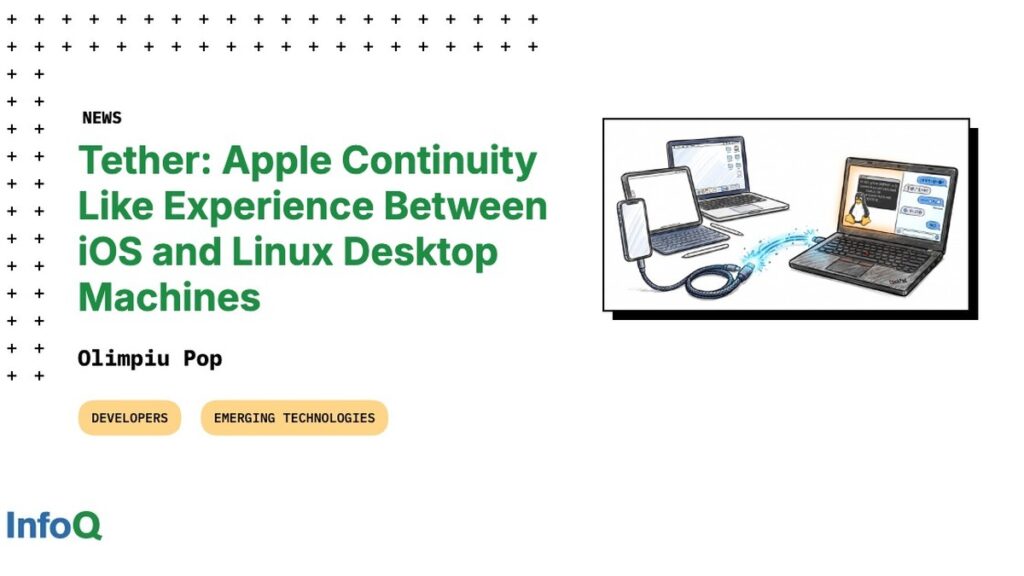
Open-source developer Zack Bartel has built Tether, a project that aims to bring Apple Continuity-style features to Linux workstations. The software is designed to make cross-platform use between iOS devices and Linux desktops feel more connected, with support for sending iMessages, syncing clipboards, and viewing iOS notifications from a Linux machine.
The idea matters because Apple’s ecosystem features have long been one of the company’s strongest advantages, but those conveniences have typically been limited to Apple hardware. Tether does not change Apple’s platform boundaries, but it does offer Linux users a way to recover some of that day-to-day integration without switching operating systems. For people who use Linux at work but rely on an iPhone personally, that could remove a frequent source of friction.
Apple Continuity On Linux
Apple Continuity is the right frame for understanding Tether because the project is not trying to reinvent messaging or notifications. Instead, it is focused on making familiar Apple-style interactions available on a Linux desktop. According to the source material, the current capabilities include iMessages, clipboard synchronization, and iOS notification viewing.
That combination is practical rather than flashy. Clipboard sync can reduce the small but constant interruptions that come from moving text or links between devices. Notification access can help users stay aware of what is happening on their phone without picking it up repeatedly. iMessage support is the most visible feature, since it touches one of the most widely used communication habits among iPhone owners.
Because Tether is open source, it also fits a broader pattern in desktop software: communities building bridges where mainstream vendors have not provided seamless interoperability. In this case, the bridge is specifically aimed at Linux workstations, which are powerful and flexible but often have less polished integration with consumer mobile platforms than Apple’s own devices do.
How Tether Connects Devices
The project uses secure local network communication along with a custom Bluetooth stack. Those details are important because they suggest Tether is built with reliability and security in mind, not just convenience. Local communication can keep interactions close to the devices involved rather than sending them through an unrelated service path, and Bluetooth support can help with the kinds of nearby-device connections that continuity features often depend on.
For readers, the practical implication is that Tether is trying to solve the problem at the infrastructure level, not just by wrapping a single app around another. That approach may make the experience more resilient, but it also means the project’s real-world usefulness will depend on how well those connection methods work across different Linux setups and hardware combinations.
As with any software that bridges two ecosystems, compatibility and setup effort will likely matter as much as the headline feature list. The source material does not describe the installation experience, supported distributions, or any limits on device pairing, so users should watch for those details as the project develops.
Why It Matters For Linux Users
Apple Continuity-style features are not only a convenience issue; they can influence which devices people choose to keep using every day. When phones and computers share notifications, clipboard content, and messaging access, the combined workflow can feel more integrated and less distracting. Tether addresses that exact gap for Linux users who also use iOS.
That could matter most for developers, power users, and hybrid workers who prefer Linux on the desktop but do not want to abandon an iPhone. Rather than choosing between platform preference and ecosystem convenience, they may be able to keep both. Even if some users rely on Tether for only one feature, such as clipboard sync, the reduction in context switching could be meaningful.
The project also highlights how open-source tools continue to fill interoperability gaps in ways large platform vendors often do not. Tether is not presented as a replacement for Apple’s own Continuity system, and it may never match it feature-for-feature. But it is a concrete example of the Linux ecosystem adapting to user demand for cross-device continuity.
What To Watch Next
For now, the most important question is how Tether evolves beyond its initial feature set. Readers should watch for broader device support, improvements to connection stability, and whether the project expands beyond the capabilities currently described in the source material.
It will also be worth following how the Linux community responds. Open-source projects can grow quickly when they solve a real workflow problem, especially one that touches daily use rather than specialized technical tasks. If Tether proves dependable, it could become a useful reference point for future efforts to make iOS and Linux work together more naturally.
In the near term, Tether stands out less as a finished consumer product and more as a promising interoperability project. Its value lies in making Apple Continuity feel less exclusive, and in showing how open-source developers can extend familiar device experiences into places where official support is limited.