

How to Prompt High-Detail Creature Portraits
Strong creature detail begins with anatomy and material logic.
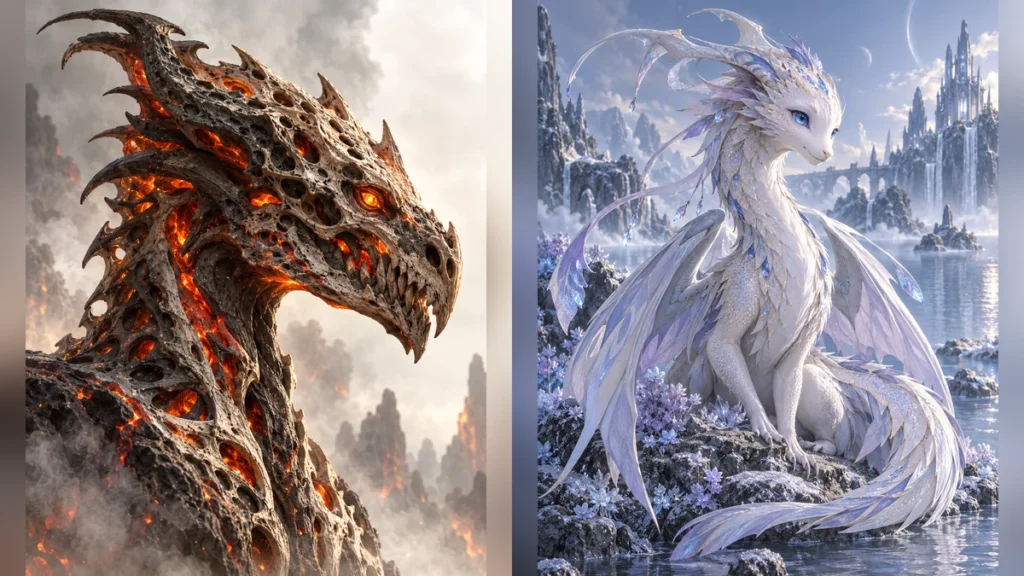
“Highly detailed” is not a visual plan. A useful creature portrait brief explains what the creature is made of, how it moves, and which feature should carry the viewer's attention.
Define three design anchors
Choose a silhouette, a material transition, and a behavior. For example, a nocturnal glider may have a broad cheek silhouette, matte pebble scales transitioning to soft wing skin, and a cautious head tilt. These anchors make the creature recognizable beyond a single close-up. Avoid borrowing a famous mascot's eyes, muzzle, or horn arrangement.
Direct the light
Use one dominant light source and a weaker fill. Raking light reveals scales, feathers, pores, or cracked ceramic. Keep the eye catchlight consistent with the source. A portrait can be dark, but the facial structure still needs readable planes. Reserve extreme close-ups for a companion image after the full creature is established.
Inspect in layers
At thumbnail size, judge silhouette and focal point. At full size, check paired eyes, jaw or beak mechanics, limb attachment, material transitions, and stray duplicated parts. Compare several views to ensure the same creature returns. Regenerate a broken anatomical area rather than hiding it under smoke or a crop.