

Village Illustration Prompts: People, Buildings and Seasons
Village illustration prompts for original village illustration projects. Five adaptable examples with production checks and practical next steps.
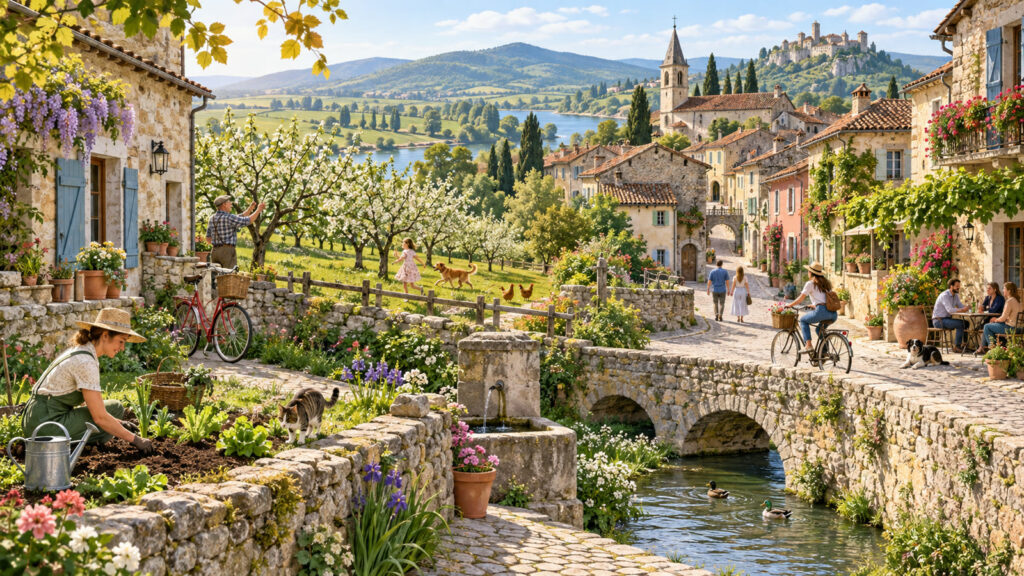
Village illustration prompts can turn a broad idea into a useful visual brief when the audience, output size, and success criteria are explicit. A village scene becomes memorable when its buildings, roads and people suggest a real daily rhythm. These prompts move through spring, summer, autumn, winter and a small business use case, with distinct illustrated styles and practical checks for coherence.
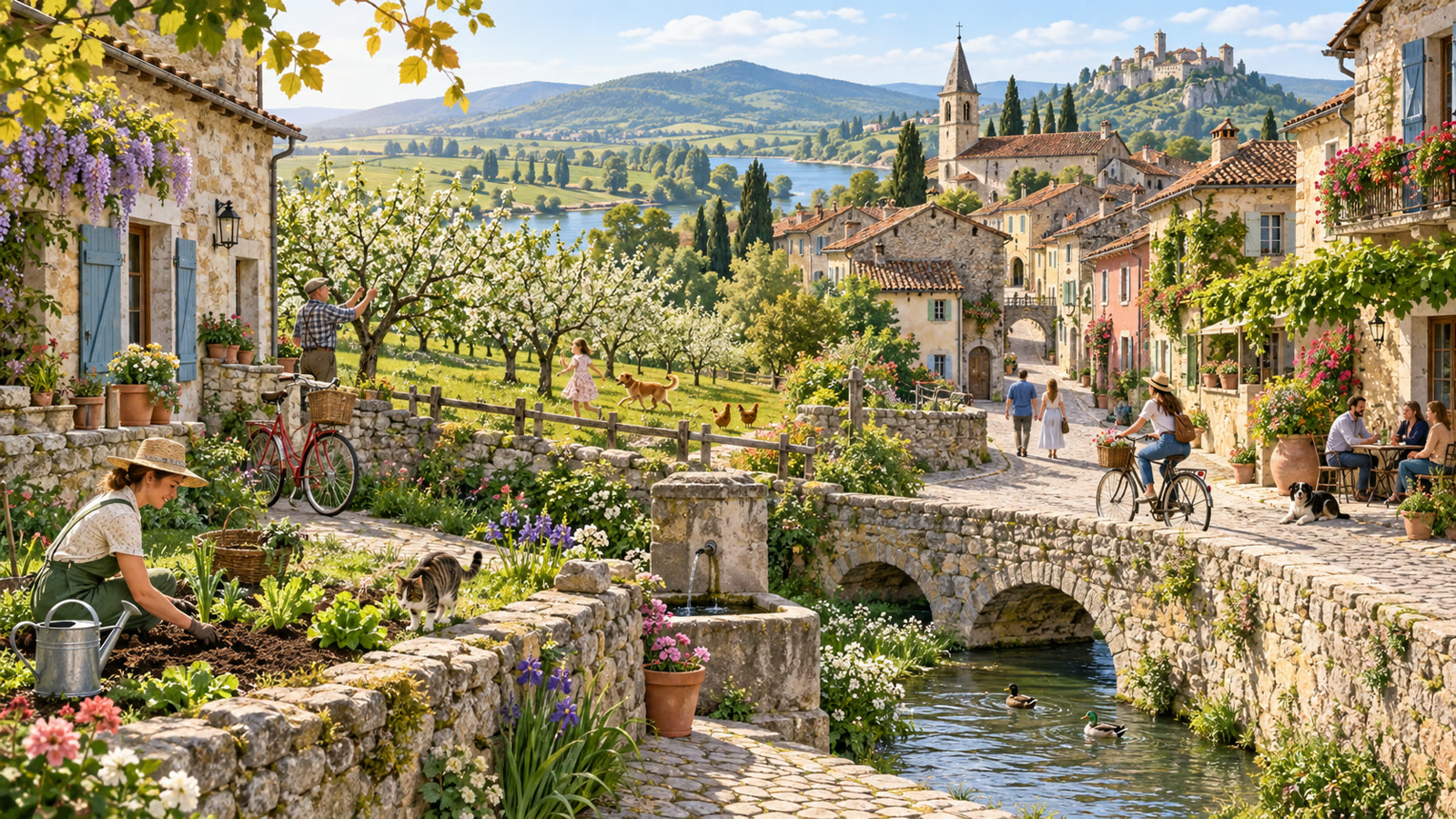
Build a clear village illustration brief
Choose a region, terrain and era before asking for decoration. Describe building materials, street pattern, weather, community activity and a viewpoint. Keep scale consistent: doors, people, trees and vehicles should make sense together. Avoid using a real village name unless the illustration is based on verified references.
Before generating, decide where the result will appear. Specify the aspect ratio, how much space should remain for edited text, the intended audience, and any brand or personal details that must stay consistent. Keep typography outside the generated image when exact spelling matters. Save the source prompt and compare several outputs at the final viewing size.
Five Village illustration prompts to adapt
1. Spring orchard morning
Illustrate an original small village in spring with an orchard, stone houses, people planting seedlings and bicycles near a market corner. Warm editorial style, believable street width, varied roof shapes, soft morning light and a clear path through the image. Wide article cover with natural sky space, no text or copied postcard composition.
2. Summer riverside festival
Create a cheerful cartoon village beside a gentle river in summer. Neighbors prepare a community picnic and hang simple bunting, children play safely away from the water, and boats remain properly moored. Distinct house silhouettes and plausible bridge placement. Square social crop, original characters, no text or branding.
3. Autumn farming story
Paint a rural village after harvest with fields, a small barn, stacked crates and people walking home in the late afternoon. Use a textured storybook style, restrained amber and blue palette, realistic season cues and modest architecture. Portrait book-page composition with a clear focal family, no exaggerated abundance or invented signs.
4. Winter quiet street
Illustrate a winter village lane after fresh snow, with smoke from a few chimneys, warm windows, a person carrying firewood and a dog following. Keep roofs and footpaths structurally plausible. Atmospheric watercolor, wide panorama and subtle depth. No Christmas decoration unless requested, so the scene works for general winter use.
5. Local tourism map art
Design a friendly illustrated map concept for a rural tourism website using supplied real landmarks: guesthouse, bakery, trailhead and bus stop. Keep their relative positions faithful to the source sketch and show useful paths rather than decorative shortcuts. Clean isometric style, no generated labels; reserve space for verified place names added in editing.
How to refine Village illustration prompts
For a series, use one reference sheet for regional materials, roof pitch, street width and recurring residents. Change season without rebuilding the settlement layout. If people or vehicles seem too large, return to a simple blockout and re-establish human scale.
For a second pass, change one variable at a time: lighting, camera angle, color range, character gesture, or layout. This makes comparisons meaningful. If the image will support an offer, add the real copy and logo in a layout editor after the visual is approved. Never let a model invent product claims, prices, dates, or customer testimonials.
Quality and publishing checklist
Check whether roads connect, houses have practical access, waterways flow logically and people fit the built environment. If the artwork represents a real community, verify landmarks and avoid invented services or cultural details. Preview the illustration at card size to ensure the main activity remains readable.
Inspect the output at the dimensions used on the final page or device. Look for inconsistent anatomy, repeated objects, broken perspective, unreadable small details, and a focal point hidden by the crop. Write descriptive alt text for informative web images; the W3C image tutorial offers a useful decision guide. Explore the prompt catalog and more practical articles for related workflows.
Frequently asked questions
Can I reuse one village across different seasons?
Yes. Lock the map and architectural details, then change weather, plants, clothing and activities.
How should labels be added to a map?
Typeset verified names outside image generation so they are accurate and accessible.