

Landscape Concept Art Prompts for Multiple Styles
Landscape concept art prompts for original landscape concept projects. Five adaptable examples with production checks and practical next steps.
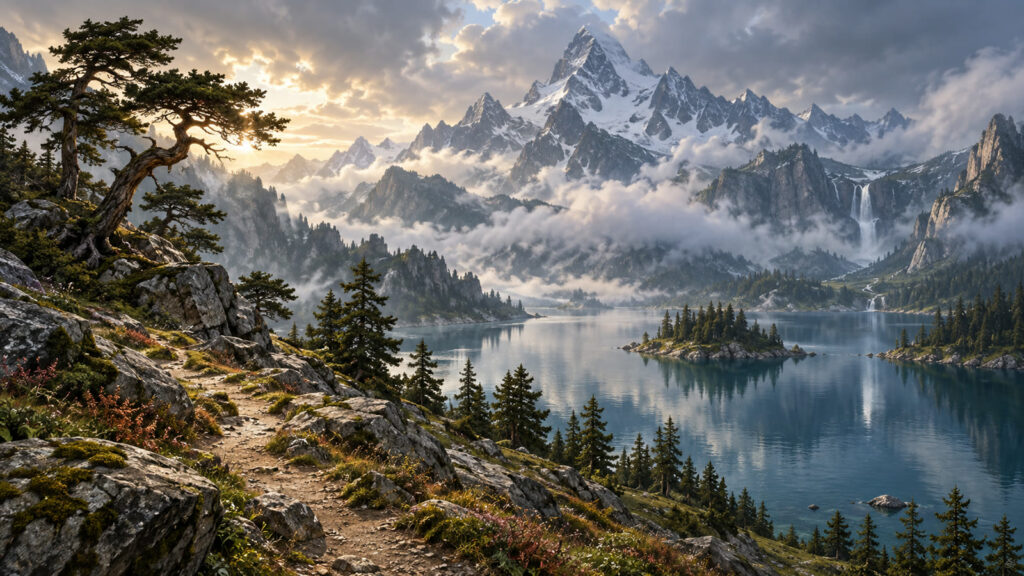
Landscape concept art prompts can turn a broad idea into a useful visual brief when the audience, output size, and success criteria are explicit. Landscape concept art can support games, books, brand visuals and personal worldbuilding. A good prompt connects terrain, story and viewpoint. These five directions explore painterly, cinematic, isometric, watercolor and stylized 3D approaches to a coherent environment.
Build a clear landscape concept brief
Describe the world’s climate, terrain, scale, access paths and the story the viewer should infer. Pick one viewpoint and one time of day. State whether the image is a mood piece, a navigation map or a production reference. If making a series, repeat geography and landmarks before changing style.
Before generating, decide where the result will appear. Specify the aspect ratio, how much space should remain for edited text, the intended audience, and any brand or personal details that must stay consistent. Keep typography outside the generated image when exact spelling matters. Save the source prompt and compare several outputs at the final viewing size.
Five Landscape concept art prompts to adapt
1. Painterly mountain lake
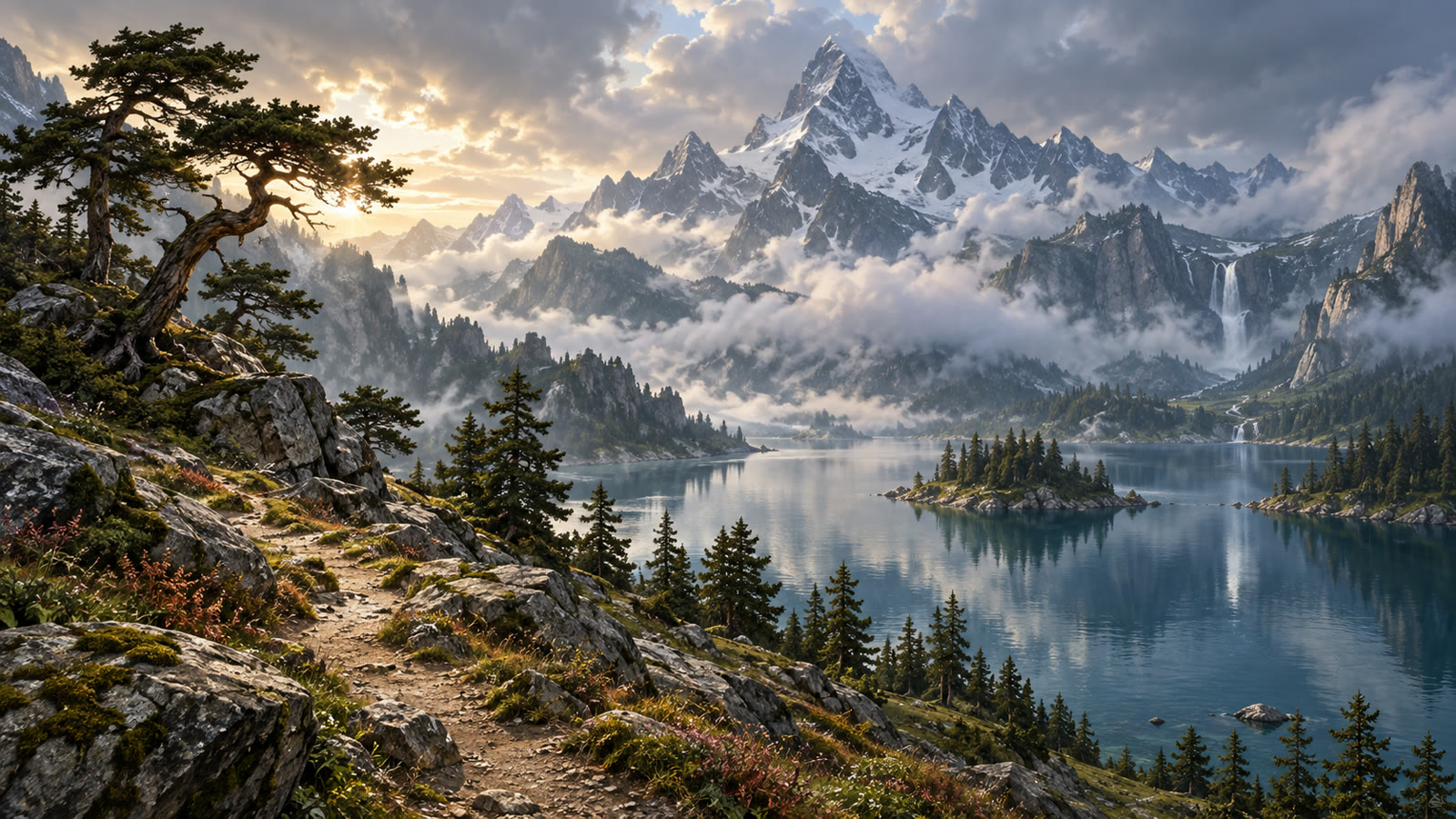
Create an original painterly landscape concept of a mountain lake bordered by windswept pines and a narrow path. Low clouds cross the ridge, a small wooden shelter establishes human scale, and cool morning light reveals three depth planes. Wide game-key-art composition, believable terrain and water flow, no text or recognizable existing fantasy franchise elements.
2. Cinematic desert crossing
Design a cinematic landscape concept of a dry plateau with eroded stone, sparse hardy plants and a caravan trail leading toward a distant pass. Late-afternoon light, strong foreground-to-background depth and a plausible route through the terrain. Horizontal 2.39:1 frame, restrained palette, no impossible arch shapes or copied film imagery.
3. Isometric village valley
Illustrate an original isometric valley environment for a strategy game. Show a river, bridges, farms, compact village and forest edge with readable paths and consistent scale. Bright stylized color, clean elevation changes and distinct zones for gameplay. No UI text, symbols or arbitrary decorative buildings blocking routes.
4. Watercolor coastal path
Paint a quiet watercolor concept of a coastal footpath above a small fishing village in early spring. Sea grass, simple stone houses, believable harbor geometry and soft wind in the clouds. Portrait book-cover composition with open sky for later title placement. Keep the village human in scale and avoid duplicating rooftops.
5. Stylized 3D forest clearing
Develop a stylized 3D environment concept for a forest clearing with one ancient tree, layered understory, a shallow stream and a path leading onward. Clear silhouette and navigation cues, warm shafts of light, reusable material palette and plausible vegetation density. Show an eye-level view plus a small top-down layout without labels.
How to refine Landscape concept art prompts
Take the strongest concept and draw a simple map of its landmarks and routes. Then regenerate with the same geography from another viewpoint. If the environment changes between views, lock the map, horizon and major masses before polishing foliage or color. Separate mood references from buildable layout.
For a second pass, change one variable at a time: lighting, camera angle, color range, character gesture, or layout. This makes comparisons meaningful. If the image will support an offer, add the real copy and logo in a layout editor after the visual is approved. Never let a model invent product claims, prices, dates, or customer testimonials.
Quality and publishing checklist
Check paths, water sources, structural scale and lighting direction. For games, ask whether a player can understand where to go; for covers, ask whether title space survives crop. Avoid accidental imitation of recognizable franchises or real artists. Keep a short visual bible for consistent follow-up images.
Inspect the output at the dimensions used on the final page or device. Look for inconsistent anatomy, repeated objects, broken perspective, unreadable small details, and a focal point hidden by the crop. Write descriptive alt text for informative web images; the W3C image tutorial offers a useful decision guide. Explore the prompt catalog and more practical articles for related workflows.
Frequently asked questions
How do I keep a landscape consistent across views?
Repeat the landmark map, proportions, season and palette in every prompt, and compare against a chosen reference sheet.
Which style is best for a game environment?
Choose based on gameplay readability and production needs, then test at the actual screen size.