

AI Prompt for Designing a Modular Game Level Blockout
Use this ready-to-use AI prompt to plan a modular game level blockout with gameplay objectives, pacing, environmental beats and a clear level flow before you start building.
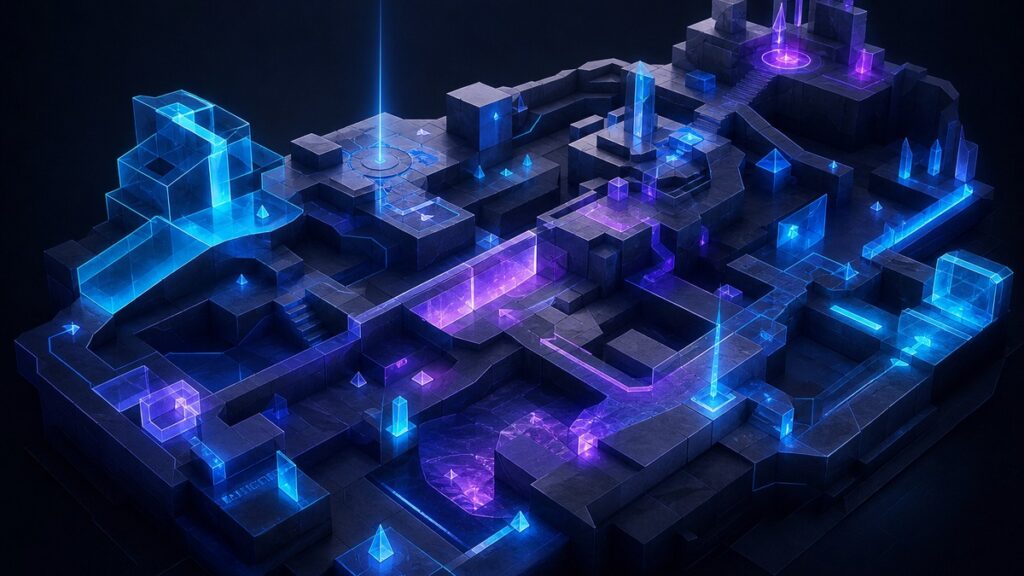
This modular game level blockout prompt helps you turn a rough idea into a playable layout with clear objectives, pacing and environmental beats before you spend time on final art.
Use it to define the route, place interactions and make sure each space has a gameplay purpose, a readable flow and a distinct moment for the player to notice.
Design a Modular Game Level Blockout With Clear Gameplay Beats
Plan a playable level layout, objective flow and environmental rhythm before building the final scene.
COPY THIS PROMPT:
Act as a senior level designer for a modular game environment.
Help me design a modular game level blockout that is playable, readable and built around strong gameplay objectives and environmental beats.
I will give you a game genre, player goals, level mood, platform constraints and any key set pieces. Your job is to turn that into a practical blockout plan that I can use as a starting point in a 3D level editor.
First, produce a level planning overview that includes:
– The core player objective
– The intended player path or route options
– Main spaces or zones in the level
– Important sightlines and landmarks
– Movement rhythm and pacing changes
– Gameplay beats such as combat, traversal, puzzle or stealth moments
– Environmental beats that change the mood or visual focus
– Any modular kit pieces needed for the blockout
Then create a blockout plan with:
– A start area, mid-level progression and final encounter or exit – Suggested room, corridor or open-space proportions – Where to place gates, doors, jumps, cover, choke points or checkpoints – Where the player should pause, reorient or discover a new view – Notes for transition spaces between major beats – Suggestions for where the environment should become quieter, denser, taller, darker, brighter or more open
Make the output practical and usable:
– Keep the language direct and editor-friendly
– Use bullet points or numbered sections when helpful
– Avoid vague design advice unless it is tied to a concrete layout choice
– Do not invent lore, mechanics or art details unless I ask for them
– If information is missing, make reasonable design assumptions and label them clearly
– Focus on blockout logic, navigation, pacing and gameplay readability
– Include one short note about what should be tested first in playtest
Output format:
1. Level concept summary
2. Player objective and intended flow
3. Modular blockout zones
4. Gameplay objectives by section
5. Environmental beats and visual rhythm
6. Blockout notes for spacing, transitions and sightlines
7. First playtest priorities
8. Short revision checklist
Game genre or level type:
[Enter the genre, perspective or level type]
Player goal:
[Describe what the player should accomplish]
Level mood or theme:
[Describe the setting, tone or atmosphere]
Key mechanics or constraints:
[List movement, combat, puzzle, stealth or production constraints]
How to use this modular game level blockout prompt
What this prompt helps you do
A strong blockout starts with intention. This prompt helps you move beyond a simple floor plan and think about how the player will read the space, move through it and experience different moments along the way.
- Plan a playable level before final art
- Connect objectives to layout decisions
- Shape pacing through space, scale and transitions
- Place landmarks that help orientation
- Design environmental beats that change the mood
- Support combat, traversal, stealth or puzzle flow
- Identify early playtest priorities
- Reduce aimless or overly decorative level design
💡 Pro Tip
Ask the AI to separate gameplay beats from environmental beats. That small distinction often produces better results because the layout can then serve both function and atmosphere instead of blending everything into one vague description.
Example: From rough idea to blockout plan
Sci-fi stealth level where the player must reach a control room, avoid patrols and restore power after a blackout.
Level concept summary: A damaged facility with a broken central spine, side maintenance routes and a final control-room reveal.
Player objective and intended flow: Enter through a service area, move through disrupted corridors, bypass patrols, reach the power station and unlock the control room.
Modular blockout zones: Start room, maintenance corridor, security checkpoint, vertical service shaft, power core chamber, transition hall and final objective room.
Gameplay objectives by section: Learn movement rules at the start, choose a safe route past patrols, navigate a vertical traversal moment, activate a power switch, then return through a changed space.
Environmental beats and visual rhythm: Begin with tight, dark spaces; open into a tall industrial chamber; shift to quieter emergency-lit hallways; end with a more focused and exposed control room.
Blockout notes: Use clear sightlines to major landmarks, keep cover and stealth routes readable, and add one short rest space before the final room.
First playtest priorities: Check whether the player understands the route, whether patrol spacing feels fair, and whether the objective transition is easy to follow.
Why this prompt works
A vague request like “design a game level” often gives you attractive but impractical ideas. This prompt is more useful because it asks for a modular structure, an objective-driven path and specific notes about pacing and environmental change.
It also encourages the AI to think like a level designer instead of a general creative writer. That means the response is more likely to help with actual blockout decisions such as room size, route clarity, gating and where to add moments of visual emphasis.
When used well, the modular game level blockout becomes a planning tool rather than just a loose idea generator, which makes it easier to test and iterate.
Frequently Asked Questions
Can I use this prompt for different game genres?
Yes. It works for action, stealth, puzzle, platforming, horror and exploration levels as long as you describe the player goal and movement style clearly.
Do I need to provide a detailed art direction?
No. A short mood or theme description is usually enough for blockout planning. You can add more art direction later if needed.
Can the AI suggest room sizes and layout proportions?
Yes, and that is one of the most useful parts. The prompt asks for practical spacing guidance so you can build something testable instead of guessing at scale.
Should I ask for combat and traversal in the same blockout?
Only if your level really uses both. If one mechanic is more important, make that clear so the layout supports the main experience.
Can I reuse the same prompt for iteration?
Yes. After the first result, ask for revisions focused on flow, readability, encounter spacing or environmental rhythm.
When to use this prompt
Use this modular game level blockout prompt when you are planning a new map, testing a mission concept or trying to turn a loose idea into a practical playable layout.
It is especially helpful early in production, when you need to decide how the player should move, what each area should achieve and where the level should create tension, pause or reveal a new space.
It is also useful during revisions if a blockout feels flat, confusing or too similar from one area to the next.
Best practices for better level blockout prompts
Start with a single clear objective instead of cramming every possible idea into one request. A focused prompt usually produces a layout with better pacing and stronger decision-making.
Tell the AI what kind of player experience you want: tense, exploratory, tactical, fast-moving or puzzle-led. That helps it choose the right layout rhythm and environmental changes.
If the result feels too generic, ask for one more pass focused on landmarks, transitions or testing priorities. Small refinements are often more useful than asking for a complete rewrite.
Finally, use the response as a starting point. The best blockouts are shaped by iteration, playtesting and your own design judgment.
Summary
This modular game level blockout prompt helps you plan a playable layout with clear objectives, readable routes and environmental beats that support the experience.
Use the modular game level blockout prompt when you want a practical design foundation that can guide early blockout work, support playtesting and make revision decisions easier.
Looking for more practical AI prompts?
Explore AI Craft Pad for more useful prompts, tools and guides.
Browse Prompts →