

OpenAI Jalapeño Chip Shows Strong Inference Gains
OpenAI says its Jalapeño chip delivered leading inference results on a SemiAnalysis benchmark, pointing to faster responses and better power efficiency at scale.
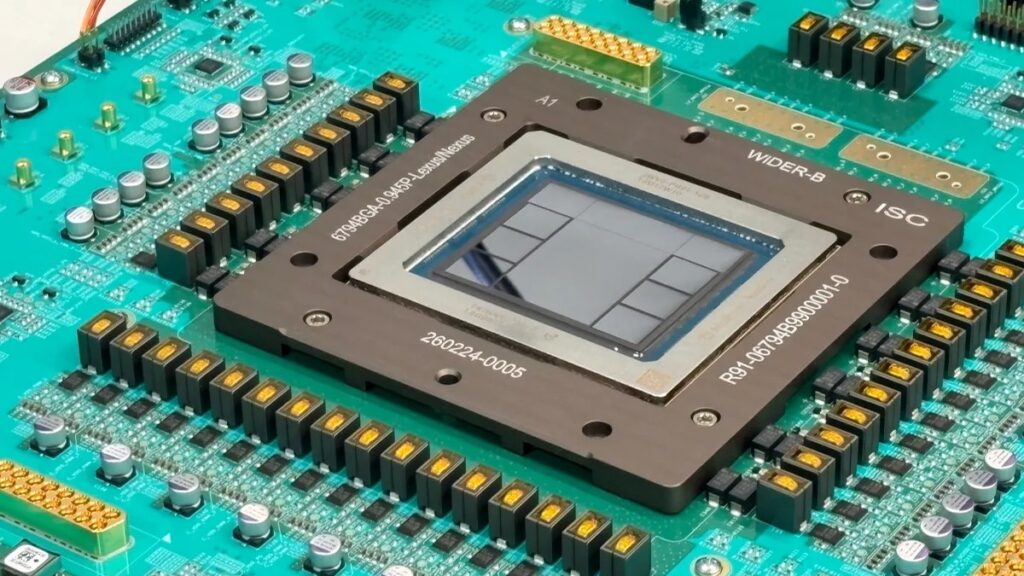
OpenAI’s OpenAI Jalapeño chip is starting to look less like a concept and more like a practical bet on how future AI systems will be served. At the Hot Chips conference, the company shared new benchmark results for Jalapeño, its custom inference chip, and said the system outperformed currently available state-of-the-art inference processors on SemiAnalysis’ InferenceX benchmark.
The results matter because inference is the part of AI that turns a trained model into a real product experience. It is what powers chat responses, search assistance, and other user-facing tasks. In that setting, speed and efficiency are not just technical bragging rights. They affect how quickly a system responds, how many users it can handle, and how much power it consumes while doing it.
OpenAI Jalapeño Chip And The Inference Race
According to OpenAI hardware chief Richard Ho, the benchmark results show a “very, very significant performance advance” over the state of the art. OpenAI said Jalapeño delivered both more tokens per user and more throughput per kilowatt than the leading inference systems tested on the benchmark.
That combination is important. More tokens per user points to a system that can support longer or more productive interactions. Higher throughput per kilowatt suggests better efficiency, which could matter a lot for large-scale deployments where electricity and cooling are major operating costs.
OpenAI also said Jalapeño is designed to reduce delays in the prefill and communication phases of inference, which the company described as bottlenecks. The chip is built to minimize data movement and communication delays, and OpenAI says model state, including the KV cache used during response generation, can be kept local while the system activates the right mix of compute, memory, and networking for each stage of inference.
That design choice reflects a broader shift in AI infrastructure: the bottleneck is no longer only model quality. It is also how efficiently a company can move data, route requests, and keep response latency low across a fleet of users.
Why The Power And Latency Gains Matter
OpenAI said Jalapeño is intended to serve a lot of customers efficiently while also keeping latency low. In practice, that means the chip could help OpenAI or partners run AI services that respond faster without requiring as much power for each unit of work.
For businesses building AI products, this kind of hardware can influence pricing, reliability, and deployment scale. Faster inference can improve the user experience directly, while better power efficiency can make it more realistic to expand services without a proportional jump in infrastructure costs.
The benchmark comparison was against an Nvidia Blackwell system, but the timing matters. Jalapeño is not yet widely deployed, and competitors are likely to keep improving before it reaches broad rollout. That means the numbers are promising, but they are also an early signal rather than the final word.
OpenAI has said Jalapeño is part of a multigenerational platform. The company wants AI products, models, chips, and memory to be developed together, rather than as separate layers stitched together later. That full-stack approach could give OpenAI more control over how inference behaves across different phases of a request.
What To Watch Before Deployment
OpenAI said Jalapeño is expected to arrive in very small volumes at the end of 2026, with more significant deployment coming in 2027. That timeline means the near-term question is not whether the chip is interesting. It is how much of OpenAI’s real-world serving infrastructure it can eventually support.
Readers should watch three things next. First, whether OpenAI provides additional benchmark details or broader testing beyond the initial results. Second, whether the chip’s efficiency claims hold up as deployment expands. Third, whether the company’s tightly integrated hardware-and-software strategy translates into real advantages in latency, cost, and capacity at scale.
For now, Jalapeño appears to be OpenAI’s clearest signal yet that it wants to build AI infrastructure around its own serving needs, not just rely on off-the-shelf processors. If the early benchmark results continue to hold, the chip could become an important part of how OpenAI delivers faster and more efficient AI services in the years ahead.